5 EV Charging Business Lessons from Comcast Smart Solutions
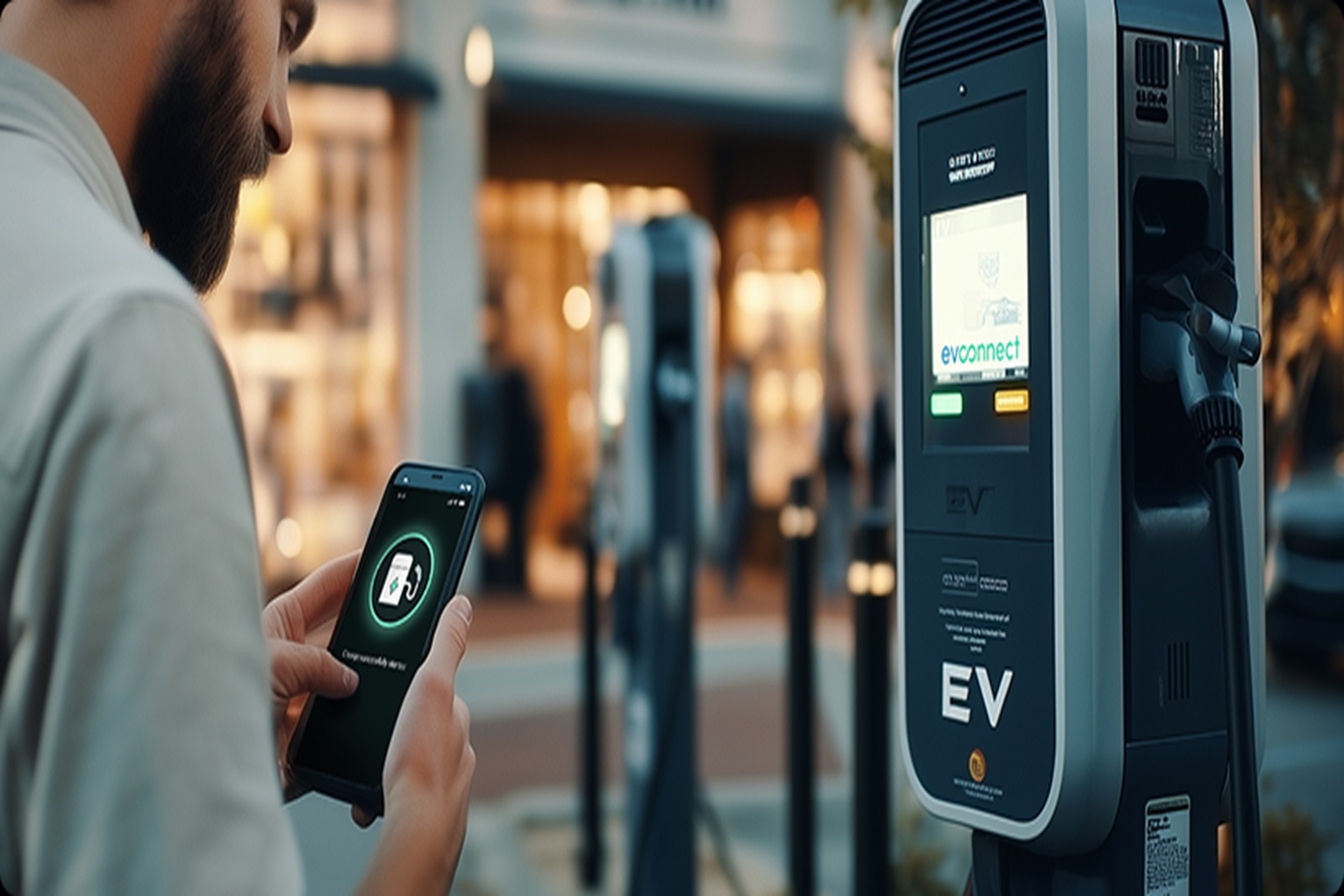
If you’re planning, scaling, or optimizing an EV charging business, the fastest path to results is a strategy that blends the right hardware, software, and partners.
In our recent webinar, Staying Ahead in the EV Charging Business (opens in a new tab) with Jake Purcell (opens in a new tab) (Sr. Director, Comcast Smart Solutions) and Matt Schaeffer (opens in a new tab) (GTM Marketing Manager, EV Connect), we addressed the realities of deployment, uptime, scalability, and ROI with actionable guidance for site hosts and operators.
Below are the key takeaways from the discussion, plus complete answers to the five main questions we covered.
The EV Charging Market Is Recalibrating, Not Slowing
- EV adoption continues to evolve with most charging occurring at home, and how much faster chargers are now—most DCFC installations are using 400kW chargers.
- NEVI programs continue to move forward at the state level, even as federal incentives evolve; proactive states (like Texas) are advancing deployments and standards.
- Despite the federal policy shift under the OBBA, charging infrastructure continues to expand, though its future is less certain.
- The industry is evolving to treat EV charging as a connected ecosystem, taking into account power, software, data, and customer experience.
“The right partners are going to have the expertise and be able to deploy for you at scale, and think about the more holistic vision of what you’re trying to achieve from an EV charging program.”
– Jake Purcell, Sr. Director, Comcast Smart Solutions
EV Charging Business Success – 5 Lessons from Comcast
1. What should organizations keep in mind when planning an EV charging deployment?
Start with outcomes and usage profiles. Define who you serve (employees, residents, fleets, public), charging dwell times, and expected throughput. From there, conduct power studies (utility capacity, transformer loading), assess ideal charger placement for safety and convenience, and validate ADA access, trenching, and permitting timelines. The webinar emphasizes that there’s no one‑size‑fits‑all model—customization is critical to right‑sizing power and hardware, and to futureproofing for fast charging or higher utilization.
Scale with a roadmap. Plan phased capacity upgrades, panel sizing for future ports, and conduit runs that avoid rework. Build scenarios for NEVI or local incentives to de‑risk capex over time.
2. Why is network management software important to the success of an EV charging program?
Reliability, visibility, and revenue control. Network software powers proactive monitoring, remote diagnostics, driver support, and dynamic pricing models that improve ROI. It centralizes O&M, energy cost controls, and user access (public vs. private), and enables data‑driven decisions, the difference between merely “offering charging” and operating a scalable service.
Tip: Comcast’s properties use dynamic pricing to manage dwell time and demand—weekday vs. weekend rates, resident vs. guest access—and tie it to loyalty programs or building access systems. The right EV charging software and integrations are key differentiators for long‑term success.
3. What are the most effective ways site hosts can maximize results?
- Design for experience: things to consider in your design stage include clear wayfinding, lighting, ADA compliance, easy payment, and real‑time availability elevate satisfaction and repeat usage.
- Operational excellence: Use telemetry to reduce truck rolls, set SLA‑backed uptime targets, and schedule firmware updates during off‑peak hours.
- Data to decisions: Report on utilization, session revenue, stranded energy, and queueing patterns to refine pricing and add ports where demand is proven.
- Partnership leverage: Engage vetted partners for ecosystem design. Everything from smart lighting, video analytics, signage, and parking, so that on-site EV charging becomes part of a broader customer experience and revenue plan.
4. What advice would you give to a business who is just entering the EV charging space?
Anchor the business case before equipment decisions. Map your goals (amenity value, employee benefit, fleet transition, public revenue) to KPIs: uptime, utilization thresholds, price elasticity, and support SLAs.
The webinar underscores partnering early to pressure‑test the business model and deployment plan—most deployment hurdles are solvable with the right partners and a phased approach.
Tip: Choose systems that won’t box you in. Favor open, interoperable platforms with robust API/edge integrations, proven device support, and clear upgrade paths to faster DC charging or future features.
5. How will the EV charging landscape evolve in the next 2–5 years?
Higher‑power fast charging and smarter energy management (things like load balancing and demand response) will become table stakes, pushing more sites to plan for capacity and queuing.
Software‑led differentiation—integrations with property systems, loyalty, and analytics—will separate leaders from basic providers.
Local policy momentum (things like EV‑ready ordinances and permitting streamlining) will continue to shape site design and expansion pace, even as federal incentives ebb and flow.
Webinar Recap: Getting Started in the EV Charging Business
In summary, there are five key steps to take when preparing to launch or scale a successful EV charging business:
Define outcomes. Start by clarifying your goals—are you aiming to attract customers, support employees, or monetize public charging? Knowing your target audience and success metrics (uptime, utilization, ROI) ensures every decision aligns with your business objectives.
Engineer the site. Conduct a thorough site assessment that includes power availability, ADA compliance, and optimal charger placement for safety and convenience. Planning for trenching, permitting, and utility timelines upfront prevents costly delays and redesigns later.
Select the platform. Choose an open, interoperable network management system that supports dynamic pricing, remote diagnostics, and robust reporting. This flexibility allows you to integrate with property systems and adapt as technology and standards evolve.
Operate with data. Use real-time analytics to monitor charger health, track utilization, and optimize pricing strategies. Data-driven insights help you reduce downtime, improve customer experience, and make informed decisions about expansion.
Leverage partners. Engage trusted partners to design a holistic ecosystem that includes EV charging, smart lighting, signage, and security. Strategic partnerships accelerate deployment and ensure your solution scales seamlessly as demand grows.
About EV Connect
EV Connect is the comprehensive EV charging platform for companies of all sizes to build, run, and scale their EV charging business. Trusted by CPOs, OEMs, fleets, utilities, and more.
With our industry leading EV charging software and white label EV charging solutions, integrate EV charging into your app and create custom charging solutions that fit your brand perfectly.
Request a Quote today and find out why EV Connect is the leading EV charging platform to run your business!
Related Reading: